Kitchen
What does a restaurant have to post and keep?
By Felix S. Pavel · Updated · 12 min read
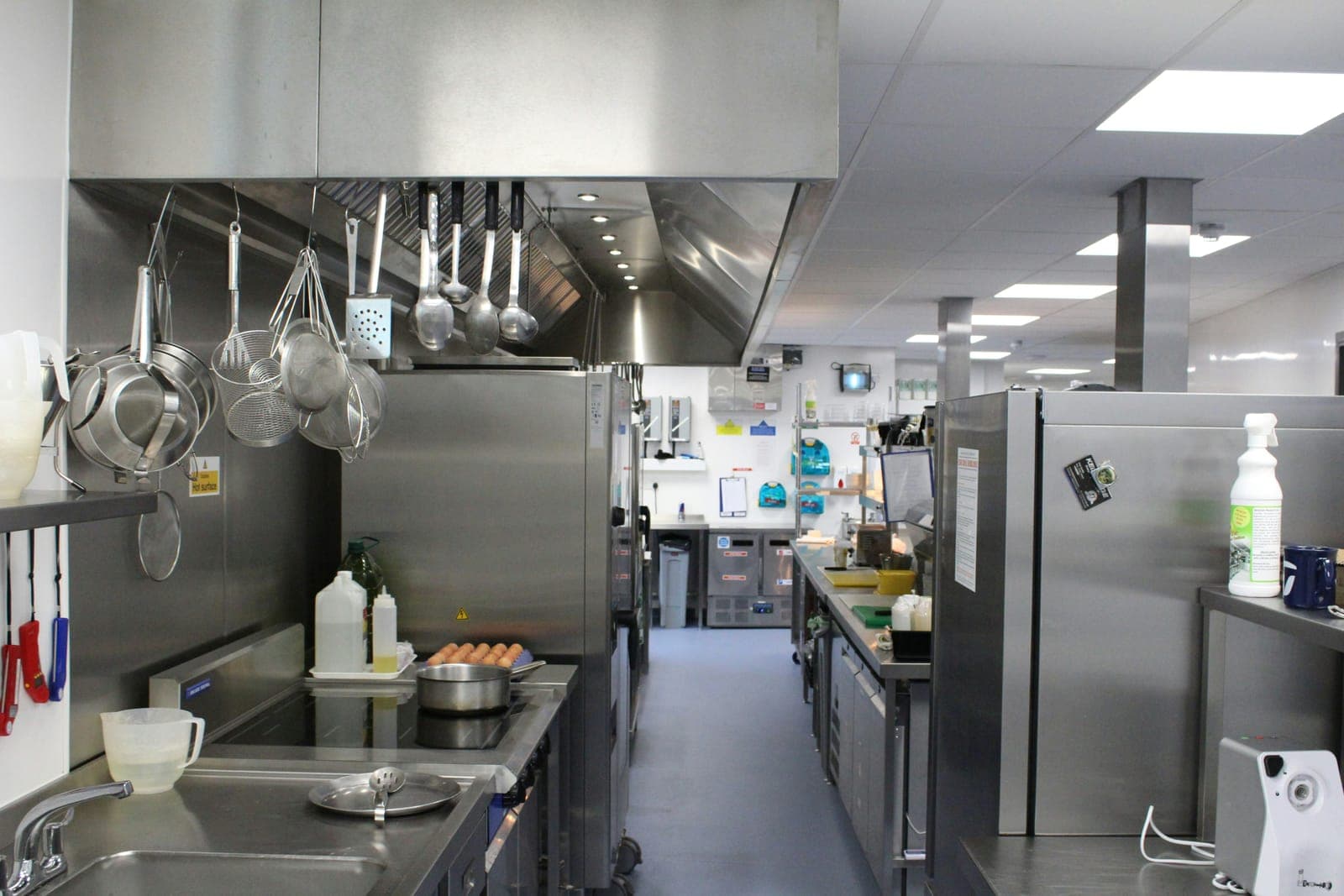
A restaurant posts the federal labor law posters where employees can see them, its health permit where guests can see it, and a wash-hands sign at every staff hand sink. It keeps payroll and time records, Forms I-9, tip records and a short list of Food Code records for the lengths of time below. The posters come straight from the agencies that require them, and your state and county add their own rules.
The quick answer
Post the federal labor posters, your health permit and a wash-hands sign. Keep pay, hiring, tip and a few food safety records for the time each rule gives.
Post it where people can see it. Keep it for as long as its rule says.
| Post or keep | What the source says |
|---|---|
| Federal labor posters | From the agencies |
| Health permit | Where guests can see it |
| Payroll records | 3 years |
| Time cards | 2 years |
| Shellstock tags | 90 days |
Federal and Food Code rules, read on the agencies' pages on October 14, 2026. Your state and county rules are what apply.
The short version
- The federal labor posters come straight from the Department of Labor, the EEOC and OSHA. DOL's and OSHA's are free, and OSHA says not to pay a third-party vendor for its poster.
- Display your health permit where guests can see it, a wash-hands sign at each staff hand sink, and a consumer advisory on menus that list raw or undercooked animal foods.
- Keep payroll records 3 years, time cards 2 years, and each Form I-9 for 3 years after hire or 1 year after the job ends, whichever is later.
- Daily temperature, cooling, sanitizer, cleaning and pest logs are good practice under the model Food Code, not requirements of it. Your state code and county rules decide.
Restaurant labor law posters: the federal ones
The Department of Labor's workplace posters page lists each federal notice with its revision date. These are the ones that matter to most restaurants:
| Notice | Who gives or posts it |
|---|---|
| Minimum wage (FLSA), with its tip credit part | Every employer covered by the FLSA's minimum wage rules |
| Know Your Rights (EEOC) | Covered employers |
| Job safety and health (OSHA) | Private employers, where workers can easily see it |
| Family and Medical Leave (FMLA) | Employers with 50 or more employees in 20 or more workweeks |
| Polygraph protection (EPPA) | Employers in or affecting commerce, not government |
| Military service rights (USERRA) | Posted or given another way: see below |
- Minimum wage. DOL says every employer of employees covered by the FLSA's minimum wage rules must post the FLSA poster, in a place where employees can readily read it. Its current version is dated April 2023, and DOL says earlier versions, including the August 2016 one, no longer meet the requirement. The poster itself has a tip credit part: an employer that claims a tip credit pays a cash wage of at least $2.13 an hour, and makes up the difference if tips and that wage fall short of the minimum wage.
- Know Your Rights. The EEOC's page says the law requires covered employers to post it, and gives the penalty for not posting as $680, adjusted each year for inflation. The page also says its poster documents are “undergoing revision” under an executive order, so check it for a newer version before you print.
- Job safety and health. OSHA's page calls it the “OSHA Cares That You Go Home Safe” poster (DOL's list still carries the older “It's the Law” title, and OSHA says an earlier version you already have is acceptable). A copy you reproduce must be at least 8.5 by 14 inches with 10-point type.
- FMLA. Only employers with 50 or more employees in 20 or more workweeks need the FMLA poster. A smaller restaurant doesn't.
- EPPA. DOL lists the Employee Polygraph Protection Act notice for employers engaged in or affecting commerce. It doesn't apply to federal, state or local governments.
- USERRA. DOL says an employer may post the notice where employee notices are customarily placed, or give its full text another way, such as handing it out, mailing it or emailing it. It is the one federal notice that doesn't have to hang on a wall.
You don't need to buy any of these. DOL provides its posters as free electronic copies, and its Poster Advisor helps employers meet the poster requirements of several DOL laws. OSHA says its poster “is free from OSHA” and tells owners not to pay a third-party vendor for it. The EEOC offers its poster as a download to print and post.
State labor posters, and whether to pay a poster vendor
The Poster Advisor covers federal DOL posters only. For state posters, such as a state minimum wage notice, DOL points employers to their state department of labor, and its State Labor Offices page lists each state's labor office with its website. Posters change when rates change, so look at your state's page again when a new rate starts. The free deadline calendar has the dates for new wage rates.
Companies sell laminated sets with the state and federal posters together, and some owners pay for the convenience of getting them in one order. That is a choice, not a requirement: each agency's own version is free. OSHA is the one that says so in plain words about its own poster.
Restaurant posting requirements: what to display for guests
The food rules in this section come from the FDA's Food Code. The section numbers below are the same in the 2026 edition and the 2022 edition. The Food Code is a model: it binds a restaurant through the state or local code that adopts it (more on that below).
- The health permit (8-304.11). The permit holder posts the permit in a place in the restaurant that is conspicuous to guests.
- A wash-hands sign (6-301.14). A sign or poster telling food employees to wash their hands goes at every hand sink they use, clearly visible to them.
- The consumer advisory (3-603.11). If an animal food such as beef, eggs, fish, lamb, milk, pork, poultry or shellfish is served raw or undercooked, tell guests about the added risk. A disclosure names or asterisks those foods, and a reminder is an asterisked footnote on the menu, a brochure, a table tent or a placard.
- An allergen notice (3-602.12). The permit holder notifies guests in writing when unpackaged food contains a major food allergen as an ingredient. A line on the menu, a table tent or a placard can do it.
- Calorie labels, for chains. FDA's menu labeling rule covers restaurants that are part of a chain with 20 or more locations under the same name and with substantially the same menu. Covered places show calories on menus and menu boards, two required statements, and written nutrition information on request. A restaurant that isn't covered may register to follow the rule voluntarily, with FDA Form 3757. See do restaurants have to list calories on the menu.
Required posters for restaurants vary by city and county
Cities and counties add their own signs. New York City is one example. Its Health Department's required signs page lists a choking first aid poster, a poster on the availability of CPR equipment, an alcohol pregnancy warning sign, a no smoking sign and a wash-your-hands poster, and says you can get them free by calling 311. It sends owners to 311 to check whether the food allergy poster applies to them. NYC also requires a letter grade card to be posted where it can easily be seen by people passing by.
That is one city. Another city or county has a different list, and some have none of these. Check your city or county health department's pages for the signs and notices it requires, and your state labor department for the labor ones.
Where the food rules come from, and the 2026 Food Code
The FDA says the Food Code is a model code that is not required. States, counties and cities adopt it, sometimes years after a new edition comes out. In its 2024 report on adoption of the Food Code, FDA counted 11 state agencies in 7 states on the 2022 edition, and 30 state agencies in 24 states on the 2022 or the 2017 edition. What binds your restaurant is your state's food code and your county's rules, in the edition your state uses.
The FDA released the 2026 Food Code on September 17, 2026. Among its changes, it adds “a new requirement for written employee illness policies that are maintained and available,” an alternative cooling process for foods at retail, and an exception that allows double gloving in certain cases. In the 2026 text (2-501.11), the written policy covers reporting symptoms and diagnoses, and when an employee is excluded or restricted from work and when they return. It binds a restaurant once its state adopts it.
Restaurant record keeping requirements: pay, hiring and tips
| Record | How long |
|---|---|
| Payroll records (FLSA) | At least 3 years |
| Time cards, wage rate tables, work schedules | 2 years |
| Form I-9 | 3 years after the hire date, or 1 year after the job ends, whichever is later |
| Daily tip record (employee) | Kept by the employee, to report tips each month |
- Payroll and time records. DOL's Fact Sheet 21 says employers keep payroll records for at least three years and the records used to work out wages, such as time cards and wage rate tables, for two. No particular form is required, and the records may be kept at the workplace or in a central records office.
- Tip credit records. Fact Sheet 15 says an employer that takes a tip credit keeps records of the tips reported and the hours worked in tipped and non-tipped jobs, gives the tip credit notice before taking the credit (it can be oral or written), and pays out collected tips by the regular payday.
- Form I-9. USCIS says to keep each hired employee's Form I-9 for three years after the date of hire, or one year after the date employment ends, whichever is later.
- Staff tip reports. The IRS's Publication 531, revised December 2024, says Form 4070 and Form 4070A are historical: the steps for keeping a daily tip record and reporting tips are now in the publication itself. An employee gives their employer a report for each month by the 10th of the next month, and doesn't report a month in which tips from one job total under $20.
- Form 8027, for large tipped places. The IRS's instructions for Form 8027 say you file it if you operate a large food or beverage establishment: in the 50 states or DC, where tipping is customary, and with more than 10 employees on a typical business day in the prior year. They count employees across all your food and beverage operations, by average hours per business day. It is filed yearly, and the instructions list the due dates.
The free deadline calendar has the monthly staff tip reports and the yearly Form 8027 on it, for restaurants that answer that they take tips.
Food safety logs the Food Code requires
Only a few records are written into the Food Code itself. The rest of the daily paperwork in most kitchens is good practice, which the next section covers. The records the Code does require are:
- Shellstock tags, 90 days (3-203.12). The tag or label stays on the container until it is empty. The date the last shellfish from the container is sold or served goes on the tag, label or invoice. You keep the tags, labels or invoices for 90 calendar days from that date, in date order.
- Parasite destruction records, 90 days (3-402.12). If you serve raw, raw-marinated, partially cooked or marinated-partially cooked fish in ready-to-eat form, the person in charge records the freezing temperature and time and keeps the record for 90 calendar days after the fish are served or sold. A written statement from the supplier that it froze the fish can stand in for your own record.
- Time as a public health control (3-501.19). If you hold food without temperature control for a limited time instead, you keep written procedures in the restaurant, ready for the health department, and you mark the food with the time it must be used or thrown out. The 4-hour version is the common one.
- HACCP records, for variances and reduced oxygen packaging (8-201.13, 8-201.14, 3-502.12). A restaurant that cures food, smokes it to preserve it, uses additives to preserve it or sprouts seeds needs a variance from its health department first, and a HACCP plan comes with it. So does reduced oxygen packaging, as a variance or as a HACCP plan the health department has been given before the restaurant starts. The plan lists the records to keep. For cook-chill or sous vide, the Code says to keep the records that confirm cooling and cold holding times and temperatures for at least 6 months.
Food safety logs that are good practice, not required
Many kitchens keep daily temperature, cooling, receiving, sanitizer, cleaning and pest logs. The model Food Code doesn't require them. What it does require is this:
- The person in charge makes sure employees monitor cooking, cooling and holding temperatures, through daily oversight (2-103.11). The Code doesn't say to write it down.
- A test kit that measures the strength of the sanitizer must be provided (4-302.14). A log of the results isn't part of that rule.
- Pests must be controlled by routine inspection of deliveries and of the premises (6-501.111). A record of the inspections isn't part of it.
A log is how you show an inspector what you checked and when, and many owners keep them for that reason. A state or county may require some of them, and some health departments ask to see them. What applies to you is your state food code and your county's rules, so check those before you decide which logs to keep.
Free templates, and the dates to keep
Not every sheet in a restaurant is on a government list. For the daily paper that is, such as a prep list and par sheet, a cash-out sheet and a tip-out sheet, see our free restaurant templates. For the dates in this guide, such as new wage rates and tip reports, use the deadline calendar. The tipped wage rules by state are in the tipped minimum wage guide.
Common questions
Do I have to pay for labor law posters?
No. The Department of Labor offers its posters as free electronic copies, OSHA says its poster is free and not to pay a third-party vendor for it, and the EEOC offers its poster as a download to print and post. State posters come from your state labor department. Paying a company for a ready-made set is optional.
Does an independent restaurant need calorie labels?
The federal rule covers chains with 20 or more locations under the same name. A smaller restaurant isn't covered, and may register with FDA to follow it voluntarily. A state or city may have its own rule, so check your health department.
Do I have to keep daily temperature logs?
The model Food Code doesn't require them outside the HACCP and similar records above. A state or county may. Your state food code and county rules are the ones that apply.
How long do I keep a Form I-9?
For three years after the hire date, or one year after the job ends, whichever is later.
Sources
- Workplace Posters, US Department of Labor.
- Fair Labor Standards Act (FLSA) Minimum Wage Poster, US Department of Labor, revised April 2023.
- Employee Rights Under the Fair Labor Standards Act (poster, form WH1088), US Department of Labor, REV 04/23.
- "Know Your Rights: Workplace Discrimination is Illegal" Poster, US Equal Employment Opportunity Commission.
- OSHA Cares Job Safety and Health Workplace Poster, US Occupational Safety and Health Administration.
- FirstStep Poster Advisor, US Department of Labor (elaws).
- State Labor Offices, US Department of Labor.
- Food Code 2026, US Food and Drug Administration, 2026 edition.
- Food Code 2022, US Food and Drug Administration, 2022 edition, January 18, 2023 version.
- The FDA Releases 2026 Food Code, US Food and Drug Administration, September 17, 2026.
- Adoption of the FDA Food Code by State and Territorial Agencies Responsible for Oversight of Restaurants and Retail Food Stores, US Food and Drug Administration, 2024 report.
- Menu Labeling Requirements, US Food and Drug Administration.
- Menu Labeling Rule: Key Facts for Industry, US Food and Drug Administration.
- Required Signs, NYC Health Department.
- Letter Grading for Restaurants, NYC Health Department.
- Fact Sheet #21: Recordkeeping Requirements under the FLSA, US Department of Labor, revised July 2008.
- Fact Sheet #15: Tipped Employees Under the FLSA, US Department of Labor.
- Retaining Form I-9, US Citizenship and Immigration Services.
- Publication 531, Reporting Tip Income, Internal Revenue Service, revised December 2024.
- Instructions for Form 8027, Internal Revenue Service, 2025 instructions.
Every rule and source on this page was checked on .
The rules are summarized from the agencies' own pages, checked on the date above; your state, county and city add their own. General information, not legal advice.