Kitchen
How to donate your restaurant's surplus food safely
By Felix S. Pavel · Updated · 10 min read
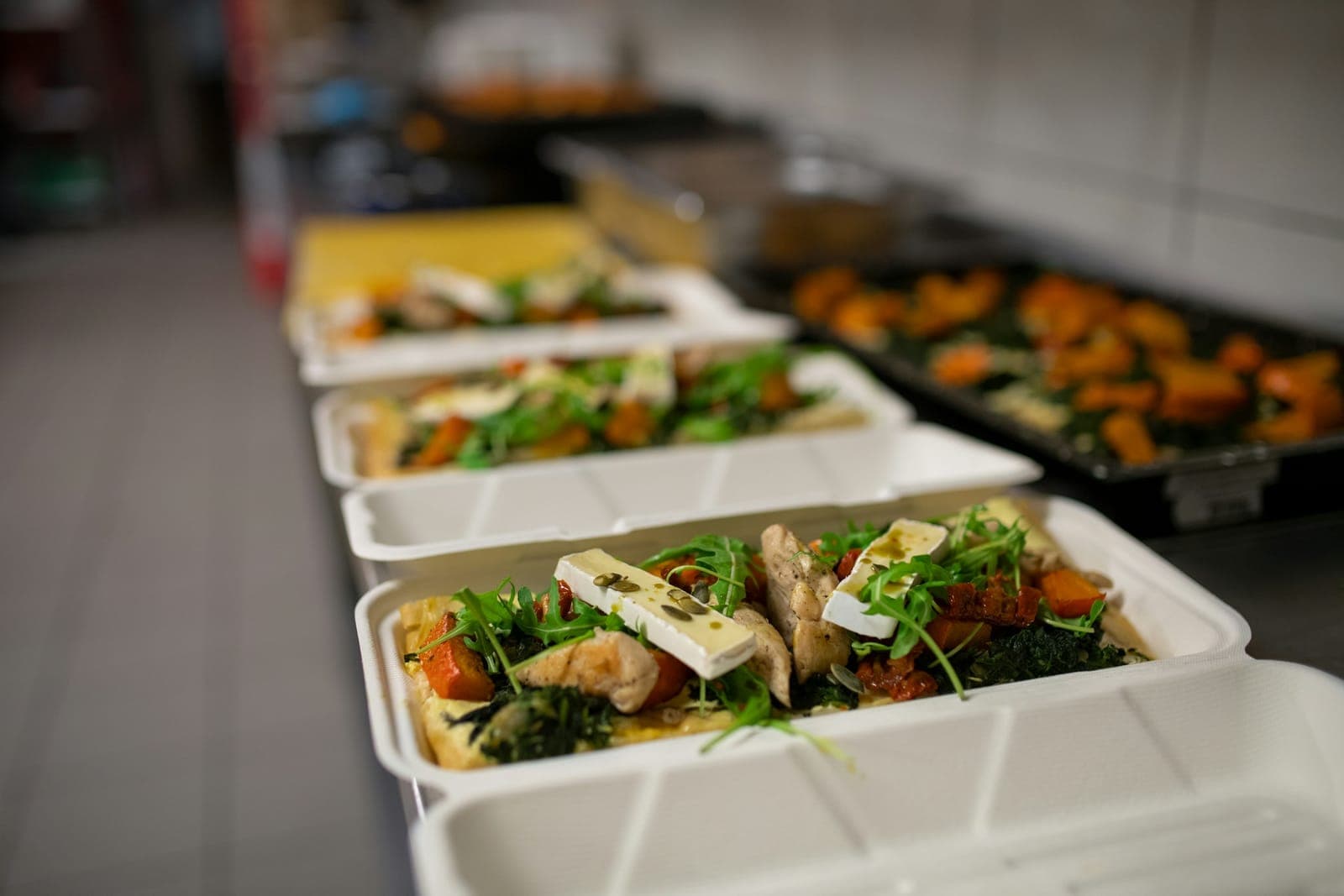
Cut over-prep first. Then, for the good food that's still left, book a regular pickup with a local food rescue group, where one collects near you. Donate only food that was never served to a guest and was kept cold or hot, or cooled quickly by the rules below. In the US, federal law protects restaurants that donate apparently wholesome food in good faith, free, to a nonprofit or straight to a person in need, unless they act with gross negligence or intentional misconduct. The finder below shows who may collect near you.
The short version
- Cut over-prep first. The EPA ranks preventing wasted food above donating it.
- Donate only food that was never served to a guest and was held at 41°F or below or 135°F or above, or cooled within the Food Code's times.
- In the US, the Bill Emerson Act protects donors who give apparently wholesome food in good faith, free, to a nonprofit that passes it on to people in need. Since January 5, 2023, it also covers restaurants giving food free, straight to a person in need.
- Food rescue groups and food banks may collect your surplus when a driver is free. Call before your first donation: each one sets its own rules.
- Food donations to qualifying charities may be tax-deductible. Ask your accountant.
Cut over-prep first
The cheapest surplus is the food you never make. On the EPA's Wasted Food Scale, preventing wasted food is “the most environmentally beneficial option”. Donating good food comes next.
Most restaurant surplus can't be donated anyway. ReFED counts nearly 70% of restaurant and foodservice surplus in 2024 as plate waste: food guests took or were served and didn't eat. So start with the food that never reaches a plate.
- Log what you throw away for a week: the item, how much and why. Give over-prepped food its own reason.
- Lower the prep amounts (pars) for the three items you over-prep most, and check next week's log.
- Cook smaller batches in slow hours, so less is left in the hot well at close.
- For good food that's still left, set up a regular pickup with a food rescue group (see the finder below).
Waste comes straight out of your food cost. To see how much it moves, read how food cost percentage works.
What you can donate, and what you can't
In the US, the FDA Food Code is the model that states and counties base their restaurant rules on, often years later and with changes. It says food “stored, prepared, packaged, displayed, and labeled” by its rules “may be offered for donation.” The 2026 edition, issued September 17, 2026, keeps that rule. In short: handle donated food exactly like food you sell.
| Rule | What the Food Code says |
|---|---|
| Cold holding | 41°F (5°C) or below |
| Hot holding | 135°F (57°C) or above |
| Cooling cooked food | From 135°F to 70°F within 2 hours, and to 41°F within 6 hours in total |
| Ready-to-eat food you made | Marked with a date if kept more than 24 hours, and kept no more than 7 days at 41°F or below. The day you make it is day 1 |
| Food served to a guest | Never offered as food again |
- Usually fine: food that was never served and was held at safe temperatures or cooled within the Food Code's times, such as extra trays from the line, prepped items in the walk-in or soup you cooled properly. Sealed food in its original packaging. Whole fruit and vegetables.
- Never: anything served to a guest, including half-eaten plates, returned dishes and bread baskets that went to tables. Food left out between 41°F and 135°F (5°C and 57°C) for 2 hours or more, other than while you cool it within the Food Code's times. Food past its use-by date, spoiled, moldy or in damaged packaging.
- Leave out: alcohol, and food made with it. Greater Pittsburgh's food bank and Second Harvest in Canada don't take either, and Felix in the UK (formerly FareShare and The Felix Project) doesn't take alcohol.
- Ask first: buffet or self-serve leftovers, reheated food, hot food straight from service, and raw items such as sushi. Many groups refuse them, and the Greater Pittsburgh food bank takes prepared food only if it's frozen at 0°F or below.
Food banks set the label rules. The Conference for Food Protection suggests five things on each container: who it's going to, who it's from, what the food is, the date of donation, and an allergen statement.
What US law protects
The Bill Emerson Good Samaritan Food Donation Act (42 U.S.C. 1791) says a donor isn't liable, civilly or criminally, for “the nature, age, packaging, or condition” of apparently wholesome food it donates in good faith to a nonprofit that passes it on to people in need. Apparently wholesome means food that meets all quality and labeling standards set by federal, state and local law, even if it's surplus or doesn't look good enough to sell.
The protection ends at gross negligence or intentional misconduct. The law defines gross negligence as doing something, or failing to, while knowing at the time it was likely to harm someone's health or well-being.
Since January 5, 2023 (Public Law 117-362), a restaurant can also give food straight to a person in need and keep that protection, as long as the food is free. Before that, protection covered food given through a nonprofit such as a food bank.
Selling surplus cheaply, for example through a discount app, is a sale, not a donation. The protection for food given straight to people covers food given at zero cost.
An NRDC legal fact sheet from June 2023 says no court case related to food donation liability exists. Some states protect donors even more: ReFED's Policy Finder shows which, state by state.
In California, restaurants with 250 or more seats, or 5,000 square feet or more, have had to donate the most edible food they can since January 1, 2024. They need a written agreement with a food recovery group and must keep records (SB 1383).
Taxes: ask your accountant
Food donations to qualifying charities may be tax-deductible. Ask your accountant.
One thing to know before you ask: the IRS says you can't deduct contributions to specific individuals, including people in need, so food handed out at the back door doesn't count. Whether a deduction helps you at all depends on how your business is taxed, and only your accountant can tell you that.
Keep a record of every pickup: the date, what you gave, how much, the group, and any receipt it gives you, so your accountant has the records to look at. Outside the US, tax rules for donated food are set country by country, so ask your accountant there too.
Find food rescue near you
Food rescue groups and food banks send someone to collect surplus food and take it to pantries, shelters and meal programs. Many use volunteer drivers, as Food Rescue US does, so pickup depends on who's free.
Food rescue finder
Pick where your restaurant is to see groups that may collect surplus food, so you know who to call first.
Pick a country to see who may collect near you.
How to start
- Pick one group from the finder and call it, or use its sign-up form.
- Ask what it takes, the smallest amount it collects, its pickup days and times, and whether it gives a receipt.
- Set a regular pickup on the same days each week, rather than calling only when you have extra.
- Show the closing team what goes in the donation bin, how to cool it and how to label it.
- Log every pickup apart from your waste, with the date, the amount and the group.
If no group near you can collect, ask your local food bank whether you can drop food off, and how it wants it packed.
Would you want your restaurant shown on a public “restaurants that donate” list?
We're asking before we build anything. We count your answer, and nothing about who you are.
Outside the US
The US law above doesn't apply anywhere else, and the UK, Canada, Australia and Ireland have no single national law like it. Talk to your local food rescue charity and your food safety inspector first: between them, they know the local rules and what can be collected.
- UK: there's no special protection law for food donors, so ordinary food law applies to donated food. It's an offence to supply food after its use-by date. Food past its best before date can be passed on if its quality is still good.
- Ireland: there's no Good Samaritan law either. The Food Safety Authority of Ireland says you can donate food within its use-by date if it's in acceptable condition and handled safely. It doesn't recommend donating hot food. Cooked food can be chilled or frozen to donate if it was held at 63°C or above, never reheated, and in the fridge within 2 hours of starting to cool. It also says to tell your food safety inspector before you start donating, and to keep a record of what you gave, to whom and when.
- Canada: every province and territory has a law protecting people who donate food, worded differently in each. Food sold “even for a nominal price” isn't a donation.
- Australia: state civil liability laws limit what a donor can be liable for, if the donor meets food safety conditions, such as making sure food is safe to eat when it leaves them.
- Other countries: the Global Food Donation Policy Atlas, from Harvard Law School's Food Law and Policy Clinic and the Global FoodBanking Network, sums up the rules country by country.
If someone needs food
Share these with anyone who asks you for food:
- In the US, call the USDA National Hunger Hotline at 1-866-3-HUNGRY (1-866-348-6479), Monday to Friday, 8 a.m. to 8 p.m. ET, or text a question to its automated line at 914-342-7744.
- Find a food bank by ZIP code with Feeding America's food bank finder.
- Call 211 for local help with food and other needs.
- In Canada, use Food Banks Canada's map of food banks, or call 211.
- In Australia, use Foodbank's Find Food.
Common questions
Can restaurants donate leftover food?
Yes, if it was never served to a guest and was kept at safe temperatures (41°F or below, or 135°F or above) or cooled within the Food Code's times. Food from guests' plates can never be donated. Check your health department's rules and the group's own rules first.
Can a restaurant be sued for donating food?
In the US, the Bill Emerson Act protects donors who give apparently wholesome food in good faith, free, to a nonprofit that passes it on to people in need, or straight to a person in need. It doesn't cover gross negligence or intentional misconduct, and it doesn't replace your local health rules. An NRDC fact sheet from June 2023 says no court case on food donation liability exists. This isn't legal advice.
Is donating food tax-deductible?
Food donations to qualifying charities may be tax-deductible. Ask your accountant. Food handed straight to people doesn't qualify: the IRS says you can't deduct contributions to specific individuals.
Is selling surplus on a discount app the same as donating?
No. A sale is a sale, even at a low price. In the US, the protection for food given straight to people covers food given free. In Canada, food sold “even for a nominal price” isn't a donation either.
Can I donate alcohol?
Leave it out. Greater Pittsburgh's food bank and Second Harvest in Canada don't take alcohol or food made with it, and Felix in the UK doesn't take alcohol.
Sources
- Wasted Food Scale, US Environmental Protection Agency, September 16, 2026.
- Restaurants & Foodservice, ReFED, 2024 data.
- Food Code 2026, US Food and Drug Administration, 2026 edition.
- The FDA Releases 2026 Food Code, US Food and Drug Administration, September 17, 2026.
- 42 U.S.C. 1791, Bill Emerson Good Samaritan Food Donation Act, Legal Information Institute, Cornell Law School, current text, last amended January 5, 2023.
- Public Law 117-362, US Congress, January 5, 2023.
- Federal Liability Protection for Food Donation: Legal Fact Sheet, NRDC, June 2023.
- U.S. Food Waste Policy Finder, ReFED.
- Cal. Code Regs. tit. 14, § 18982, Legal Information Institute, Cornell Law School.
- Cal. Code Regs. tit. 14, § 18991.3, Legal Information Institute, Cornell Law School.
- Food Donors, CalRecycle.
- Publication 526 (2025), Charitable Contributions, Internal Revenue Service, last reviewed April 30, 2026.
- Comprehensive Resource for Food Recovery Programs, Conference for Food Protection, April 2016.
- Prepared Food Donation Guidelines, Greater Pittsburgh Community Food Bank, December 2025.
- Donate Food, Second Harvest.
- Become a food supplier, Felix.
- FAQs, Food Rescue US.
- Global Food Donation Policy Atlas, Harvard Law School Food Law and Policy Clinic and the Global FoodBanking Network.
- United Kingdom, Global Food Donation Policy Atlas, April 2021.
- Ireland, Global Food Donation Policy Atlas, June 2025.
- Food safety and hygiene guidance for food banks and charities, Food Standards Agency, August 28, 2026.
- Businesses donating food: Q and A, Food Safety Authority of Ireland.
- Food Donation and Civil Liability in Canada, National Zero Waste Council, April 2018.
- Information for charities and community groups, Food Standards Australia New Zealand, October 1, 2025.
- National Hunger Hotline, US Department of Agriculture, September 17, 2025.
- Find Your Local Food Bank, Feeding America.
- 211, United Way.
- Find a Food Bank, Food Banks Canada.
- Find Food, Foodbank Australia.
Every rule and source on this page was checked on .
The rules are summarized from official sources as of the date above. Check the current rules where you operate, and with the group you donate to. General information, not legal or tax advice.