Restaurant types
Café and coffee shop costs: targets and leaks
By Felix S. Pavel · Updated · 7 min read
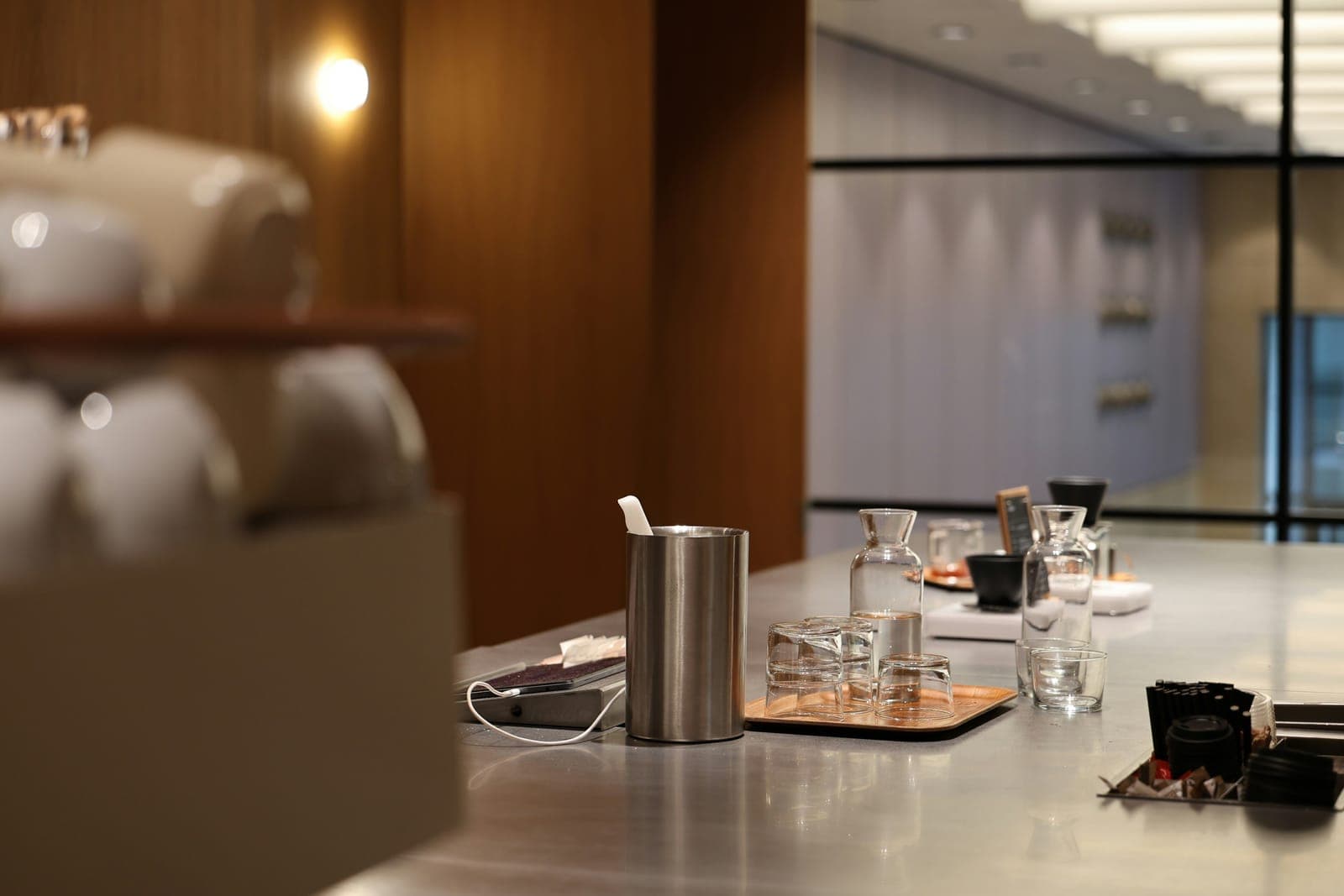
A café or coffee shop earns most of its money from drinks: about 65% of sales in the free check, with pastries and light food beside them. Small tickets and a cup under every drink set its costs apart from a restaurant's, so a café gets its own targets. Here are the targets RestaurantDoctorAI uses for cafés, why they're our own, and four places to check for a leak.
The quick answer
Healthy targets for a café or coffee shop: prime cost 60% or less, food and drink 24–32%, labor 28–34%, and rent and utilities 10% or less of sales.
Prime cost % = (food and drink cost + labor cost) ÷ net sales × 100
| Café or coffee shop | RestaurantDoctorAI's target |
|---|---|
| Prime cost | 60% or less |
| Food and drink | 24–32% |
| Labor, payroll taxes and benefits in | 28–34% |
| Rent and utilities | 10% or less |
We found no café-only cost survey. These are RestaurantDoctorAI's own, the ones the free profit check grades a café against.
Our targets, and what's published beside them
The National Restaurant Association (NRA) reports counter service as one group, limited service, so its medians mix cafés with burger counters and bowl shops. We found no café-only cost survey from the NRA, a government agency or a point-of-sale company that shows its sample. So the table puts two published sets beside our targets: the NRA's medians for 2024, and one coffee chain's results.
| Line | RestaurantDoctorAI's target | NRA median, limited service, 2024 | Dutch Bros shops, 2025 |
|---|---|---|---|
| Prime cost | 60% or less | 65% | 52.8% |
| Food and drink | 24–32% | 32.4% (food and soft drinks) | 25.9% (drinks, food and packaging) |
| Labor | 28–34% | 31.7% | 26.9% |
| Rent and utilities | 10% or less | 5.2% | Not comparable |
Prime cost: the 60% ceiling is ours. It is the line RestaurantOwner.com gives for quick service, and the ceiling we use there. The NRA's median counter restaurant ran 65%, 5 points over it. A café at the median is over our line, and we say so. The ceiling is a healthy line, not a typical one. How to track prime cost every week.
Dutch Bros is a floor, not a target. It is a drive-thru chain with high sales in each shop, and its 52.8% prime cost shows what that model reached in 2025. An independent café, with fewer cups an hour and no drive-thru, shouldn't read it as its own target.
Food and drink: 24–32%. The low end sits near Dutch Bros' 25.9%. The top is the NRA's limited-service median, 32.4%. Coffee drinks and pastries cost different shares of their prices, so work out each group too. Café food cost for resold pastries.
Labor: 28–34%. It brackets the NRA's medians for limited-service restaurants that made a profit, 30.0%, and those that lost money, 34.1%. Small tickets keep it a little above our quick-service range.
The two ranges can't both run at the top. The tops of our café ranges add to 66%, 6 points over the ceiling. When labor runs high, food and drink has to sit lower, and the other way round.
Rent and utilities. We print a ceiling, 10% or less, not a range. The NRA's median was 5.2%. Under the ceiling is fine, however low.
Drinks. We assume drinks are about 65% of a café's sales. Starbucks' company-operated stores sold 73% beverages and 23% food in fiscal 2025, by its annual report. We found no measured figure for independent cafés.
Why café numbers online disagree
- Chains and independents. Public filings come from chains with hundreds of shops and drive-thrus. A single café buys and sells at a different scale.
- What the margin counts. Many café margin figures don't say whether the owner's own pay was taken out first. A margin that leaves it out reads higher than one that counts it.
- Coffee cost against coffee sales. Guides often quote coffee cost against coffee sales alone, and may leave cups out. Our food and drink target counts everything on the menu, against all sales.
An example month, worked through
This is an example, not an average: one café with $40,000 in sales a month, $26,000 of it from drinks. Food and drink cost is 30% and labor 33%: each inside its range.
- Net sales
- $40,000
- Food and drink, 30%
- $12,000
- + Labor, 33%
- $13,200
- = Prime cost, 63%
- $25,200
- Ceiling at 60% of sales
- $24,000
That's $14,400 a year, and neither line is outside its own range: only the two together are over. At this volume each point of sales is $400 a month.
Where cafés lose money
Four places to check. The dollar figures are worked examples from round numbers, not measured costs: use your own invoices and statements.
Cups, lids, sleeves and milk on every drink
Every drink carries a cup, a lid, a sleeve and milk, whatever the coffee costs. On a low price they are a large share. Say cup, lid and sleeve cost 30 cents together and the café sells 4,000 hot drinks a month: $1,200, or 3 points of the example's $40,000 in sales. Milk adds to it: steaming 12 ounces for an 8-ounce drink pays for 4 ounces nobody drinks, every time. What to check: read your cup and lid invoices against the drinks you sold, and weigh the milk poured and the milk left in the pitcher for your three best sellers. Plate cost calculator.
Card fees on small sales
Most card processors charge a percentage plus a fixed amount on each sale. The fixed part is the same on a coffee as on a large order, so it takes more of a small sale. Say it is 10 cents: that is 2.5 points of a $4 sale and under 0.1 point of a $150 one. These are example amounts, not any processor's rate. What to check: your statement for the percentage and the per-sale fee, and what the month's fees come to against its card sales. Credit card fees calculator.
Pastries and food that don't sell by close
A pastry, a sandwich or a pot of soup that goes in the bin is food and drink cost with no sale against it. A bought-in pastry costs the same whether it sells or not. What to check: count what is left at close, by item, for a few weeks, and compare it with what you baked or ordered. Set the next order from those counts. Costing resold pastries.
Staff on the clock between rushes
A café's sales come in waves: the morning rush, then a quiet afternoon. If the same crew works every hour anyway, the free check counts $320 to $680 a month at $40,000 in sales. What to check: sales per labor hour for each hour of the day, against your cut line. How to set your cut line.
Questions café owners ask
What is a good profit margin for a coffee shop?
We found no café-only survey that shows how it was measured. The NRA's median limited-service restaurant kept 4.0% of sales before taxes in 2024. Higher figures online often don't say what they count. Prime cost under 60% is what leaves room for rent and profit.
Is a 30% food and drink cost good for a café?
It is inside our 24–32% range. Check it with labor: at 33% labor, food and drink at 30% puts prime cost over the ceiling, so it has to sit at 27% or under.
Am I a café in the free check?
Pick café or coffee shop if drinks lead, with pastries and light food. If guests order at a counter and the food is mostly meals, pick quick service or fast casual. If servers take orders at the table, pick full service.
Check your own numbers
Free calculators for the numbers on this page. No sign-up.
Free calculatorPlate cost calculatorWhat one drink or pastry costs with cup, lid and milk in, against its price.Free calculatorRestaurant budget calculatorA month of sales, costs and rent laid out line by line.Free calculatorCredit card fees calculatorWhat card fees cost on your sales, with small tickets counted.Want every leak with its dollar estimate and a plan? See what the full report adds.
RestaurantDoctorAI's targets are its own; every outside figure is linked where it's quoted. General information, not financial, tax or legal advice.